
 Spanish
 Call For A Consultation
Rio Rancho Amputation Injury Lawyer
Amputation Injury Attorney in Rio Rancho, NM
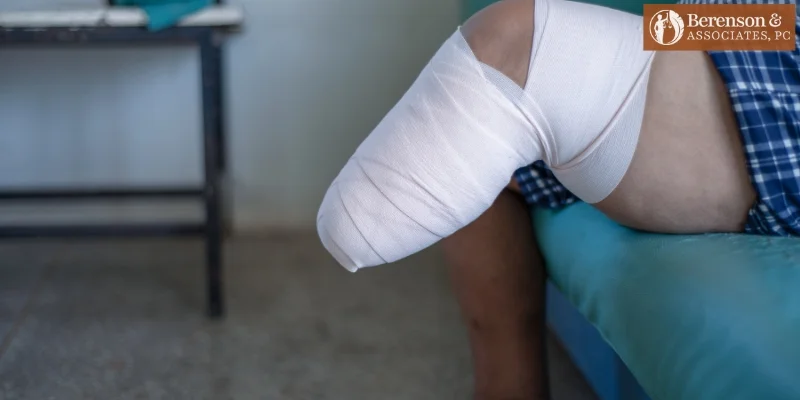
Losing a limb is a devastating injury. An amputation can have long-term physical and emotional impacts. Often, amputees have to be retrained to do different work and establish new careers. A Rio Rancho amputation injury lawyer can help you understand your rights and navigate the legal complexities of seeking compensation.
For individuals who have experienced amputation due to a workplace accident or someone else’s negligence, seeking legal representation from a Rio Rancho personal injury attorney can help cover financial losses resulting from lost wages, medical expenses, and pain and suffering.
Hire an Amputation Injury Lawyer
At Berenson & Associates, PC, our lawyers provide client-focused representation. Our office has nearly 20 years of experience handling amputation injury cases, and we offer services in English, Spanish, and Bahasa Indonesian.
You deserve an experienced lawyer who will fight for fair compensation in your case. Amputation injury laws can be difficult to understand and navigate. Let our attorneys provide a clear explanation of your options and devise a solid strategy for your case.
Types of Amputation Injuries
According to data from the National Inpatient Sample, Healthcare Cost and Utilization Project, there are 2,309,000 individuals living without a limb in the United States, 91% of whom underwent a lower extremity amputation, and 9.2% of whom had an upper extremity amputation.
Trauma was the second leading cause of amputation, accounting for 45% of all cases. A traumatic accident or injury most often involves a motor vehicle collision, a sporting injury, or a workplace accident. Medical amputations are categorized as upper or lower. Lower-limb amputations can involve the legs, feet, and toes. Specific procedures include:
- Ankle disarticulation (removal of the foot at the ankle joint)
- Knee disarticulation (complete removal of the leg at the knee joint)
- Hip disarticulation (removal of the leg through the hip)
- Partial foot amputation (removal of a portion of the foot)
- Digital amputation (removal of the toe)
- Hemipelvectomy (removal of part of the pelvis)
- Transfemoral amputations (removal of part of the leg above the knee)
Upper Limb Amputation
Upper limb amputations tend to be less common than lower limb amputations and include:
- Partial hand amputation (removal of a portion of the hand)
- Metacarpal amputation (removal of one or more metacarpal bones in the hand)
- Transradial amputation (amputation that occurs through the forearm, below the elbow joint, leaving the elbow intact)
- Elbow disarticulation (complete removal of the arm at the elbow joint)
- Shoulder disarticulation (complete removal of the arm at the shoulder joint)
- Wrist disarticulation (removal of the hand at the wrist joint)
Individuals who have suffered the loss of a limb can seek rehabilitative care at Clearsky Rehabilitation Hospital of Rio Rancho, LLC, located at 2401 Westside Blvd., Rio Rancho, 87124.
Causes of Limb Loss
Traumatic limb loss is the result of an unexpected or violent event that results in the loss of a limb. Some causes of traumatic limb loss include:
- Workplace or industrial accidents
- Bicycle accidents
- Gunshot wounds
- Defective products
- Pedestrian accidents
- Agricultural accidents
- Falls
- Electrocution accidents
- Sports injuries
- Motor vehicle accidents
- Medical malpractice
Data from the Occupational Safety and Health Administration (OSHA) show there were 2,424 reported amputations in 2023. The industries with the highest number of incidents include manufacturing, with 1,349 cases (56%); construction, 265 (11%); and transportation and warehousing, 137 (5%). Other sectors that reported fewer than 5% of incidents include mining, quarrying, oil and gas extraction, wholesale trade, retail trade, agriculture, forestry, fishing, and hunting, utilities, and waste management.
What Compensation Can I Seek for Loss of a Limb?
The type of damages you can pursue will be influenced by the unique characteristics of your case. Common damages recovered in a traumatic amputation case include lost wages, the cost of current and future medical expenses, scarring and disfigurement, diminished earning capacity, emotional suffering, physical pain, and prosthetic limbs and other assistive devices.
FAQs About Amputation Injuries in Rio Rancho
What Is the Hardest Injury to Prove?
If you were injured as a result of someone’s negligence, you may be suffering from injuries that cannot be seen and may be difficult to diagnose. Some common examples of injuries that are hard to prove include soft tissue injuries such as contusions, strains, and sprains. Other examples include nerve pain, Post Traumatic Stress Disorder (PTSD), and other forms of psychological trauma, and traumatic brain injuries.
How Much Is an Amputated Leg Worth in a Legal Claim?
In a case that involves the amputation of a leg, the settlement amount will be influenced by a variety of factors. These factors often include medical expenses, such as treatment and rehabilitation, as well as prosthetic costs and ongoing medical needs. An individual may be compensated for pain and suffering they endured as a result of the amputation, as well as for loss of income and loss of future earnings.
What to Expect From the Legal Process for an Amputation?
An amputation claim can be challenging and time-consuming, but understanding what to expect can make the process more manageable. A skilled personal injury lawyer will review the details of your amputation injury case with you. They will also work on collecting evidence to build a strong case. There will usually be a negotiation process with the insurance company or the opposing party. If a settlement cannot be reached, the case will proceed to trial.
How Long Do You Stay in the Hospital After Getting Your Leg Amputated?
A hospital stay for a leg amputation can last from five to 14 days, depending on the type of surgery and if there are any complications. Post-amputation recovery will be influenced by your medical history, age, lifestyle, general health, fitness, diet, and the surgical approach used.
Data from Johns Hopkins estimates that 41% of individuals who have an amputation are at risk for depression, anxiety, substance use disorder, and reduced quality of life. These psychological impacts may also require treatment.
Contact an Experienced Rio Rancho Amputation Injury Attorney
The consequences of an amputation can be extensive and significant, impacting your physical and emotional health. Hiring the right amputation injury attorney can help secure a successful claim.
The team at Berenson & Associates, PC, has extensive experience handling catastrophic injury cases, including amputations. Contact our office today to schedule a consultation and take the next step toward securing your future.
Request A Case Evaluation
Fields Marked With An “*” Are Required
Location
Law Office Location

© 2026 Berenson & Associates, PC • All rights reserved.
Digital Marketing By 